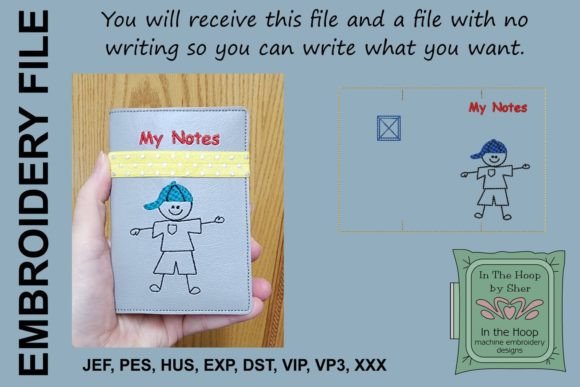
Reviewing the Boy Mini Notebook Cover Design
As a designer who has spent countless hours staring at digitized files and watching needles punch through fabric, I have learned that not every machine embroidery design is created equal. Some look fantastic on a screen but turn into a tangled mess on the hoop. Others are simple yet incredibly effective in adding value to a handmade product. Today, I am taking a close, practical look at the Boy Mini Composition Notebook Cover. This is not just a theoretical review; it is an assessment of how this specific embroidery file performs when you are trying to create a tangible, sellable item for your craft business.
First Impressions and Visual Personality
When I first loaded the Boy Mini Composition Notebook Cover into my editing software, the immediate impression was one of nostalgic charm. The design captures the essence of the classic school supply aesthetic but scales it down perfectly for the mini composition books that measure 3.25 x 4.5 inches. For those of us who remember the distinct black-and-white marbled covers of our youth, this design triggers an instant emotional connection. It feels academic, playful, and slightly retro.
The layout is compact, which is crucial for this application. A design that is too busy or large would overwhelm the small surface area of a mini notebook. Here, the visual personality is clean and recognizable. It does not rely on excessive detail that might get lost in the stitching process. Instead, it uses strong shapes and clear lines to convey the theme. This clarity is vital because it ensures the finished product looks professional rather than cluttered. For an Etsy seller or a boutique owner, this kind of immediate recognizability can significantly boost buyer engagement.
Real-World Application: Beyond the Notebook
While the primary use case is obviously covering a mini composition book, my mind immediately went to other applications. In the world of commercial embroidery, versatility is key to maximizing the return on investment for any digital embroidery file. I tested this concept mentally against several embroidery project scenarios.
Imagine using this design as a central motif on a canvas tote bag design. The rectangular shape of the notebook cover translates well to a patch-style appliqué on a bag. It could serve as a fun, educational accent for a child’s school bag. Alternatively, consider sweatshirt embroidery. Placed on the left chest or as a larger back print, this design could appeal to teachers, students, or parents who appreciate school-themed apparel. It works exceptionally well as a personalized gift for back-to-school season or teacher appreciation weeks.
I also considered its potential in baby embroidery projects. While the theme is scholastic, the soft, rounded aesthetics of many digitized versions of this concept can fit nicely on a toddler’s backpack or a study nook pillow. However, context matters. You must ensure the thread colors and accompanying elements match the age group. For older boys, sticking to traditional black, white, and red might be best. For younger children, you might introduce softer pastels if the design allows for color variation.
Technical Performance and Stitching Considerations
Let’s talk about the nuts and bolts of stitching. The description notes that this machine embroidery design comes with multiple embroidery file formats and can be used with multiple machines. This is a standard and necessary feature for any serious design assets provider. However, the real test is in the stitch types and density.
In my experience, designs that mimic printed textures, like the marbled composition cover, often rely heavily on fill stitch patterns. If the stitch density is too high, you risk puckering the fabric, especially on smaller items like a notebook cover or a baby hat. If it is too low, the underlying fabric might show through, ruining the illusion of the solid cover. When working with this design, I recommend paying close attention to the underlay stitches. A good digitizer will have included sufficient underlay to stabilize the top stitches.
You should also consider the type of stitch used for any text or borders. Satin stitch is excellent for crisp edges and small lettering, providing a shiny, professional finish. Running stitch might be used for finer details or outlines. Check the preview carefully. If the design includes tiny text, ensure it is legible at the intended size. Tiny lettering can easily become unreadable if the stitch count is insufficient or if the thread thickness is too heavy.
Fabric and Hoop Constraints
One critical aspect of using the Boy Mini Composition Notebook Cover is understanding where it should be used carefully. The target object is small—3.25 x 4.5 inches. This means you are likely working with a small hoop size, such as a 4x4 inch hoop. Working in small hoops requires precision. There is little room for error in placement.
Fabric choice is equally important. For a notebook cover, you might be stitching on cotton duck or canvas, which are stable and hold up well to embroidery. However, if you adapt this design for custom apparel like a t-shirt, you are dealing with stretchy knit fabric. In this case, a cut-away stabilizer is non-negotiable to prevent distortion. For woven fabrics like aprons or tote bags, a tear-away stabilizer might suffice, but always test on scrap fabric first.
Be cautious with textured fabrics. If you stitch this on a fluffy towel or a thick fleece, the fine details of the marbled pattern might get lost in the pile. Similarly, on dark fabric, ensure you are using high-contrast thread colors. A black design on a navy shirt will vanish. Always do a test stitch on the actual fabric you plan to use for the final small shop product.
Commercial Viability and Brand Consistency
For Etsy sellers and creative entrepreneurs, the visual appeal of this design contributes directly to perceived value. A well-executed embroidery project signals quality. Customers trust products that look neat, with no loose threads or puckering. The Boy Mini Composition Notebook Cover offers a niche appeal. It is not a generic flower or butterfly; it is specific. This specificity helps in building brand consistency if your shop focuses on school supplies, teacher gifts, or boy-centric items.
Before listing this as a commercial embroidery item, verify the license terms. Most designers allow you to sell finished physical items, but restrictions may apply to digital redistribution. Ensure you are compliant. Additionally, consider creating printable mockup images that show the design in situ—on a desk, in a backpack, or held by a child. This helps buyers visualize the personalized gift potential.
Final Designer Notes
To summarize, the Boy Mini Composition Notebook Cover is a strong contender for your next embroidery project. It balances nostalgia with practicality. To get the best results:
- Test on scrap fabric: Never skip this step. Check for puckering and thread breaks.
- Check thread contrast: Ensure the design pops against your chosen background.
- Verify hoop compatibility: Confirm the design fits your smallest hoop if needed.
- Inspect small details: Zoom in on the digitized file to check for jump stitches or overly dense areas.
- Use proper stabilizer: Match the stabilizer to the fabric weight and stretch.
This design is more than just a cute graphic; it is a tool for creating meaningful, functional items. Whether you are making a holiday embroidery gift for a student or stocking your small shop product line with back-to-school essentials, this file offers the reliability and charm needed to succeed. Treat it with the care it deserves, and it will serve your craft business well.