Mylar Teapots: A Designer’s Review for Branded Merch
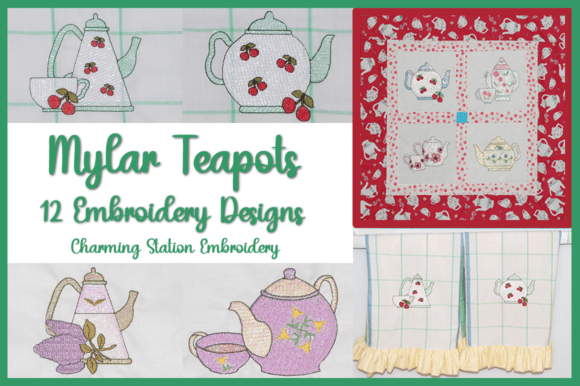
As an embroidery designer who has spent years digitizing files for small business owners, I am always on the lookout for assets that bridge the gap between aesthetic charm and commercial durability. When I first loaded the Mylar Teapots collection into my software, my immediate impression was one of clever practicality mixed with visual elegance. This set features twelve distinct teapot designs, all specifically optimized for Mylar application. For those of us in the trade, this is a significant detail. It promises the high-end sparkle of metallic finishes without the notorious headaches associated with metallic thread, such as breakage, shredding, or tension issues.
The visual personality of these designs feels both classic and playful. They are not overly rustic, nor are they starkly modern. Instead, they occupy a sweet spot that feels handmade yet premium. This balance is crucial for brand identity. Whether you are running a boutique café, a floral studio, or an Etsy shop selling artisanal goods, your merchandise needs to communicate quality instantly. The teapot motif naturally evokes feelings of warmth, hospitality, and tradition, making it an excellent choice for businesses in the Tea industry or any brand that wants to project a welcoming, cozy atmosphere through Embroidery.
Commercial Viability and Brand Application
When evaluating a digital embroidery file for commercial use, I look beyond the screen. I imagine the finished product in the hands of a customer. The Mylar Teapots set shines in its versatility for small business merch. Because the designs are optimized for Mylar, they offer a unique texture that stands out on flat surfaces. This makes them ideal for embroidered patches. A patch featuring one of these sparkling teapots can serve as a distinctive badge for staff uniforms, adding a touch of whimsy to otherwise standard work shirts or aprons.
Consider the application on custom apparel. For a local bakery or coffee shop, these designs work beautifully as chest logo accents. They are detailed enough to be recognized but simple enough to remain legible from a distance. I also see strong potential for cap embroidery. The curved surface of a baseball cap can be tricky, but if the design is scaled correctly, the Mylar accent catches the light in a way that draws attention to the brand without being overwhelming. Furthermore, tote bag design is another lucrative avenue. A sturdy canvas tote with a shimmering teapot emblem becomes more than just a container; it becomes a statement piece that customers are proud to carry, effectively turning them into walking advertisements for your brand.
For handmade product creators, these designs can elevate simple items into premium gifts. Imagine kitchen towels, as mentioned in the product description, but also consider apron embroidery for cooking classes or branded product labels for packaged teas. The consistency of using the same design asset across different mediums strengthens visual consistency and boosts customer trust. When a buyer sees the same high-quality emblem on their mug, their tote, and their apron, it reinforces the professionalism of the brand.
Technical Considerations for Production
While the aesthetic appeal is high, a professional review must address the technical realities of production. Mylar is fantastic, but it requires precision. Before running a full batch of commercial embroidery projects, you must test the design on real fabric. Not all materials react the same way to the heat and pressure of the needle, especially when Mylar is involved. I strongly advise checking the stitch density of these files. If the density is too high, it can cause puckering, particularly on lighter fabrics like cotton tea towels or thin uniform shirts.
Fabric texture plays a major role in the final outcome. On smooth fabrics, the Mylar will lay flat and reflect light evenly. On textured fabrics, such as heavy canvas or terry cloth, the effect might be slightly muted or uneven. Therefore, selecting the right stabilizer is non-negotiable. A cut-away stabilizer is often best for garments that will undergo frequent washing, ensuring the design remains intact and the fabric does not distort. For caps, which have a curved and stiff structure, you may need specific backing and topping to prevent the Mylar from shifting during the stitching process.
Another critical factor is scale. These designs should be tested at various sizes. What looks intricate and beautiful at four inches might become a muddy mess at one inch. If you plan to use these as small patch sizes or sleeve details, zoom in on your printable mockup. Check if the outlines remain clear and if the spacing between stitches allows the Mylar to sit properly without bunching. Also, consider thread color contrast. Since the Mylar provides the sparkle, the surrounding thread colors should complement it without competing. Dark uniforms may require lighter thread colors to ensure the teapot shape is visible, while light fabrics might need bolder outlines to define the design.
Strategic Advice for Business Owners
To maximize the return on investment for this design asset, start by creating a printable mockup for client approval or internal review. Place the Mylar Teapots design beside your other existing design assets to ensure it fits your brand’s visual language. Does it feel cohesive with your current logo? Does it enhance your brand identity or clash with it? Consistency is key to recognition.
Before committing to a large production run, verify the commercial licensing terms. While the product description highlights the ease of use and the included twelve designs, it is vital to confirm that you have the rights to use these files for selling finished products. Most reputable designers provide commercial licenses, but always read the fine print. Additionally, since the exact stitch count, file format, and specific hoop size recommendations are not detailed in the brief description, you must check these details in the actual download package. Ensure your machine supports the file format provided, whether it is PES, DST, or another standard.
Finally, think about the customer experience. A finished product with a Mylar accent feels luxurious. It suggests that care was taken in the creation process. This perception of value can justify a higher price point for your custom apparel or handmade goods. By choosing a design that minimizes production fuss while maximizing visual impact, you streamline your workflow and enhance your product’s appeal. The Mylar Teapots collection offers a smart solution for decorators looking to add sparkle without the stress, making it a worthy addition to any serious embroidery library.