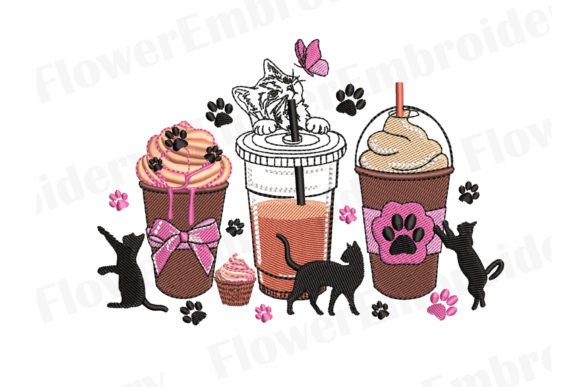
Cats and Coffee Cups: A Designer’s Review
When I first pulled up the Cats and Coffee Cups design on my digitizing software, I wasn’t looking for complexity. I was looking for charm that translates well into thread. As an experienced embroidery product reviewer and designer, I have seen thousands of motifs that look fantastic on a screen but fall flat once the needle hits the fabric. This particular design, however, strikes a balance that is increasingly rare in the crowded market of digital embroidery files. It captures a specific mood—cozy, whimsical, and relatable—that resonates deeply with modern consumers.
The visual personality of this piece is immediately apparent. It does not rely on excessive detail or microscopic text that disappears under stitch density. Instead, it uses clean lines and recognizable shapes to convey the theme. For those of us who create handmade products, this clarity is essential. Whether you are an Etsy seller preparing for the holiday rush or a boutique owner curating a small shop product line, you need designs that read well from a distance and hold up under close inspection.
Real-World Application: The Tote Bag Test
To truly evaluate any machine embroidery design, you must imagine it in a real-life scenario. I recently considered this motif for a custom embroidered tote bag project. Tote bags are a staple for craft businesses because they offer a large, flat canvas, but they also present challenges regarding fabric stability and stitch pull. I envisioned stitching Cats and Coffee Cups onto a heavy-duty cotton canvas.
The layout of the design works exceptionally well here. The composition is balanced, meaning it does not lean too heavily to one side, which helps prevent puckering on larger hoop sizes. When I mentally mapped out the thread colors, I saw immediate potential. A warm brown for the coffee cup contrasted against a soft grey or cream cat creates a sophisticated, neutral palette that appeals to a broad audience. This is not just a cute image; it is a versatile design asset that can fit into various brand aesthetics, from rustic farmhouse to modern minimalist.
Performance Across Different Products
Beyond tote bags, this design shows promise across multiple categories. For custom apparel, such as sweatshirt embroidery, the motif sits nicely on the left chest or as a larger centerpiece on the back. The stitch types likely involved—probably a mix of satin stitch for outlines and fill stitch for the body of the cat and cup—need to be managed carefully on stretchy fabrics. If you are working with fleece or jersey, using a cut-away stabilizer is non-negotiable to maintain the integrity of the finished product.
For smaller items like baby embroidery projects or personalized gifts, scale becomes the critical factor. While the design is adorable, you must check the minimum hoop size required. If the details are too fine, they may merge when stitched at a reduced size. I recommend testing the design on scrap fabric at 70% scale before committing to a baby onesie or a small patch. An embroidered patch made with this design could be a hit for craft fair products, provided you use a dense zigzag or satin border to seal the edges cleanly.
Navigating Fabric and Technical Challenges
Every designer knows that fabric texture dictates success. On smooth quilting cotton, Cats and Coffee Cups will likely shine with crisp definition. However, on textured fabrics like terry cloth towels or waffle-weave aprons, the finer details might get lost. In these cases, consider simplifying the thread colors or increasing the stitch density slightly if your digitizing software allows for edits. Always remember that running stitch elements, often used for whiskers or steam lines, can disappear on plush materials.
Dark fabrics present another hurdle. If you plan to offer this as part of a commercial embroidery service on black hoodies or navy caps, you must ensure high contrast. Light thread colors for the cat and cup are essential. Additionally, curved surfaces like caps require careful hooping. The design should be centered precisely, and you may need to use a stronger stabilizer to prevent distortion during the stitching process. Always inspect small details after a test run; if the coffee steam looks like a blob, you may need to adjust your tension or thread type.
Commercial Viability and Brand Consistency
For small business owners and digital product sellers, the value of a design lies in its versatility and customer appeal. Cats and Coffee Cups taps into two massive interest groups: cat lovers and coffee enthusiasts. This crossover appeal increases the likelihood of buyer engagement. When creating printable mockups or digital embroidery file previews, this design offers strong visual hooks. It looks professional, which builds customer trust.
However, professionalism also means due diligence. Before listing finished items on Etsy or other platforms, confirm the licensing terms. Does the purchase of this digital embroidery file allow for commercial use? Most reputable designers provide clear guidelines, but it is your responsibility to verify. Using a design without proper clearance can jeopardize your craft business. Assuming the license permits it, this design can become a signature element of your brand consistency, appearing on everything from kitchen towels to nursery decor.
Practical Notes for the Embroiderer
Before you load this design into your machine, take a moment to prepare. Here is a checklist based on my experience with similar motifs:
- Test on Scrap Fabric: Never stitch directly on your final garment. Use a similar weight and weave to gauge how the thread interacts with the material.
- Check Thread Color Contrast: View your color map in black and white to ensure the design elements remain distinct without color cues.
- Review Stitch Density: High density can cause puckering on thin fabric. If the design feels stiff after stitching, consider reducing density or using a lighter weight thread.
- Confirm Hoop Size: Ensure your machine’s hoop accommodates the full design dimensions without needing to re-hoop, which can lead to alignment issues.
- Use Proper Stabilizer: Match the stabilizer to the fabric. Tear-away for stable woven fabrics, cut-away for knits, and water-soluble for delicate or pile fabrics.
- Verify File Formats: The product description mentions multiple embroidery file formats. Ensure you have the correct format for your specific machine model to avoid conversion errors.
In conclusion, Cats and Coffee Cups is a strong contender for your next embroidery project. It offers the right blend of charm and technical feasibility for both hobbyists and professional makers. By paying attention to fabric choice, stabilizer selection, and scale, you can transform this digital file into a high-quality finished product that customers will love. Whether you are creating a holiday gift or stocking your small shop, this design deserves a spot in your library.